

Juveniles and Paperwork

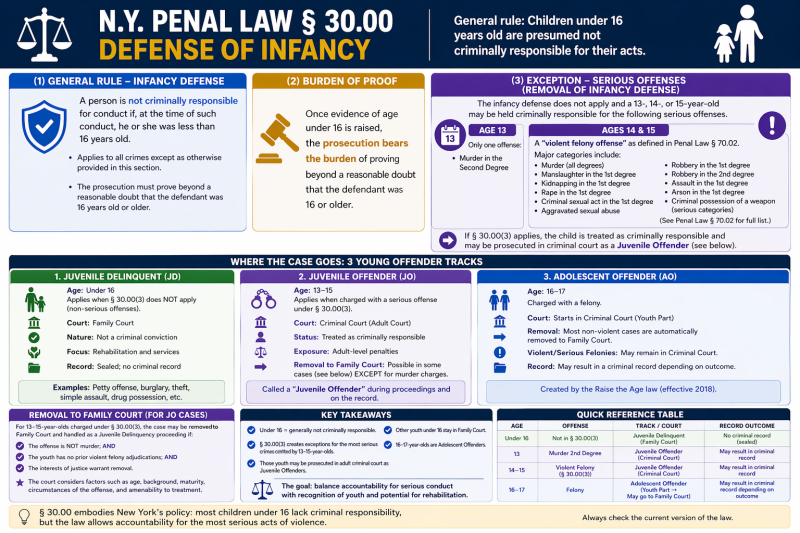
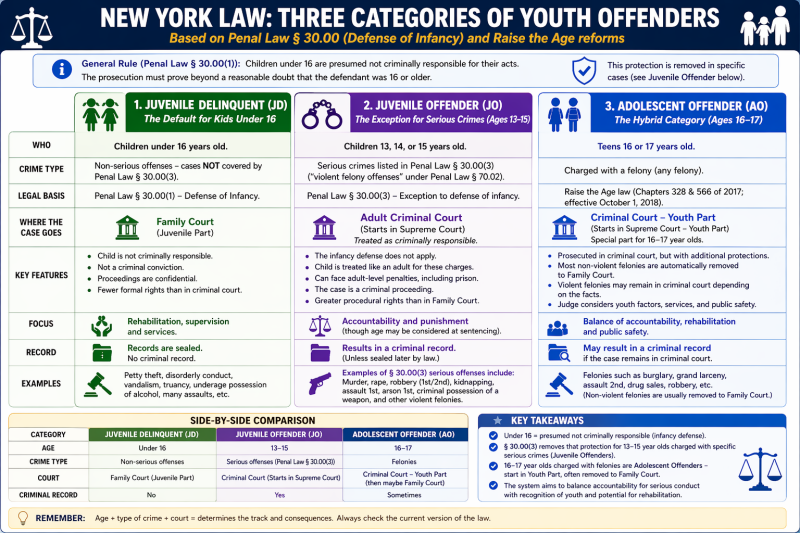
New York CPL § 120.10
What it says (in plain English):
This section explains when a court must issue an arrest warrant after an accusatory instrument (like a complaint or indictment) is filed.
🔑 Main rule
A judge will issue an arrest warrant when:
- An accusatory instrument is filed, and
- The court determines that a warrant is appropriate instead of (or in addition to) a summons
⚖️ When a warrant is typically issued
A warrant is more likely when:
- The offense is serious (e.g., a felony)
- There’s a risk the person won’t appear in court
- The person’s location is unknown
- There are public safety concerns
📨 Warrant vs. summons
- Summons → directs the person to appear in court voluntarily
- Arrest warrant → authorizes police to take the person into custody
🧠 Example
- Someone is charged with a felony and cannot be reliably located → the court issues a warrant instead of a summons.
📝 Bottom line
After charges are filed, the court decides how to bring the person to court—and § 120.10 governs when that means issuing an arrest warrant rather than relying on voluntary appearance.
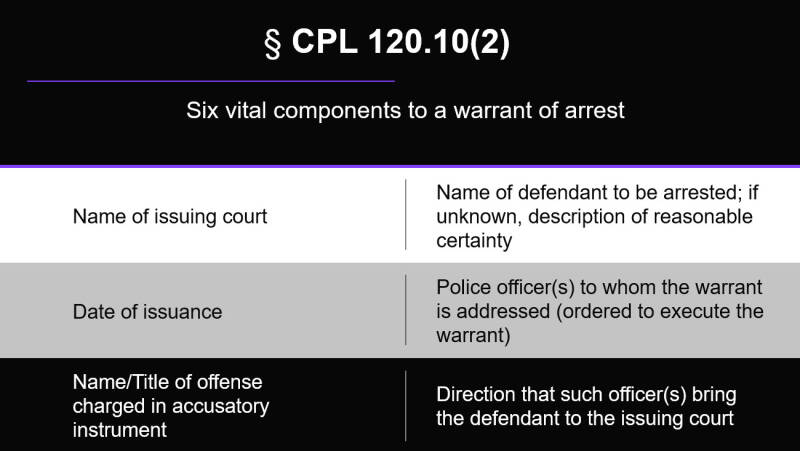
New York CPL § 120.60
What it says (in plain English):
This section explains how an arrest warrant is carried out (executed) by police.
🔑 Main rules
🔹 (1) Who can execute the warrant
- A police officer may execute an arrest warrant:
- Anywhere in New York State
- The officer must have the warrant in their possession or know its details.
🔹 (2) What the officer must do
- Inform the person:
- That there is a warrant for their arrest, and
- The reason for it, if asked
- Show the warrant if requested (or as soon as practical)
🔹 (3) Use of force
- The officer may use reasonable force if necessary to:
- Make the arrest, or
- Prevent escape
🔹 (4) Entry into premises
- The officer may:
- Enter a location where they reasonably believe the person is
- But must follow legal rules (e.g., knock-and-announce, unless exceptions apply)
🔹 (5) After arrest
- The person must be brought before a court without unnecessary delay for arraignment.
🧠 Example
Police locate someone with an active warrant at their home → they can enter lawfully (with proper procedure), arrest them, and bring them to court.
📝 Bottom line
Section 120.60 governs the practical execution of arrest warrants—who can carry them out, how arrests are made, and what happens immediately after.
New York CPL § 120.70
What it says (in plain English):
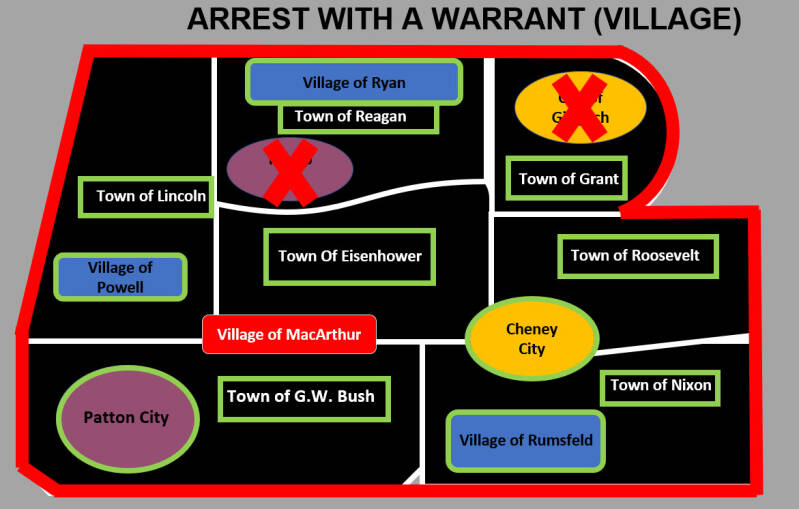
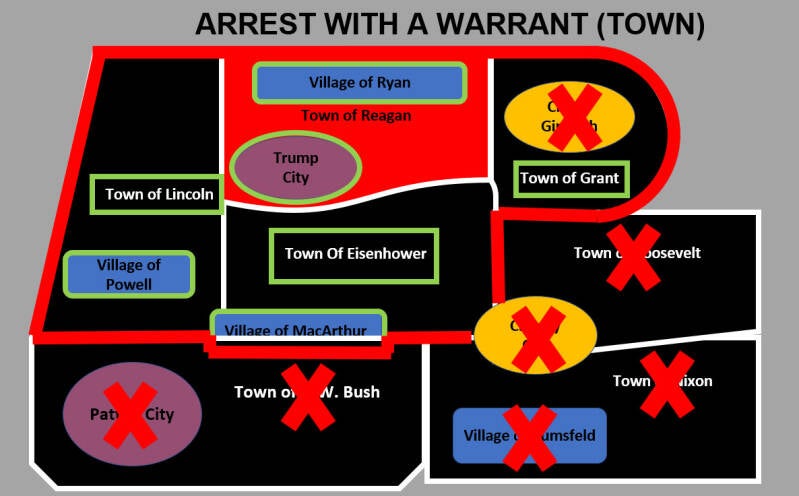
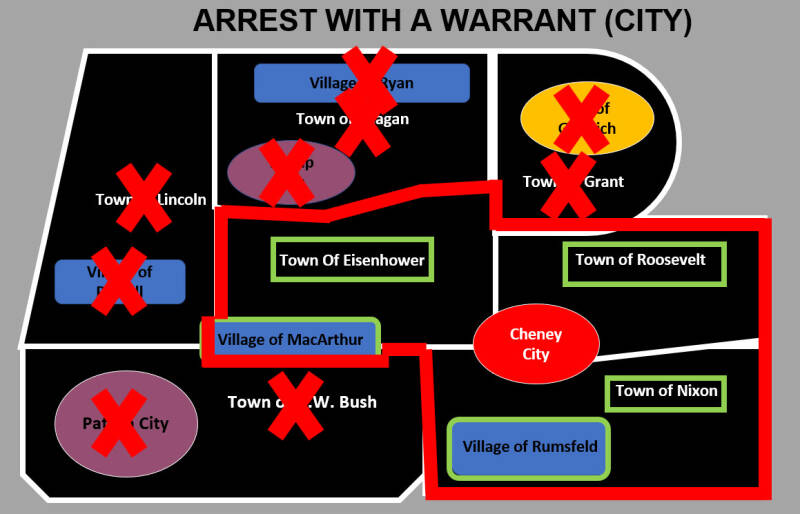
This section explains where an arrest warrant can be executed and what happens if the arrest occurs outside the issuing court’s area.
🔑 Core rule
- An arrest warrant issued in New York may be executed:
- Anywhere within the state
- By any police officer authorized to make arrests
🔹 Key points
1. Statewide execution
- Warrants are not limited to one county
- Police can arrest the person anywhere in New York
2. Arrest in a different county (local court warrants)
- If a person is arrested outside the county where the warrant was issued:
- They may be brought before a local criminal court in the county of arrest
3. Returning to the issuing court
- The system ensures the defendant will ultimately:
- Appear in the court that issued the warrant
- The interim court may:
- Set bail,
- Release the person, or
- Commit them to custody pending transfer
4. Applies to different court types
- Works for both:
- Local criminal court warrants, and
- Superior court warrants (with slight procedural differences)
🧠 Example
A warrant is issued in Albany County → the person is found and arrested in Erie County → they can be brought before a court in Erie County first, then routed back to Albany.
📝 Bottom line
CPL § 120.70 is about geography and procedure:
- Warrants work statewide
- It explains how arrests are handled when they occur outside the issuing county
- It ensures the defendant is properly processed and returned to the correct court
New York CPL § 120.80
What it actually covers (plain English):
CPL § 120.80 explains when and how an arrest warrant is executed—the mechanics of making the arrest under the warrant.
🔑 Breakdown by subsection
🔹 (1) Time of execution
- The warrant may be executed:
- At any time of day or night, unless otherwise restricted
👉 Key idea: no strict time limits unless specified.
🔹 (2) Method of execution
- A police officer executes the warrant by:
- Arresting the defendant
👉 Key idea: execution = taking the person into custody.
🔹 (3) Notice to the defendant
- The officer should:
- Inform the person that they are being arrested pursuant to a warrant
- Inform them of the charges, if requested
👉 Key idea: basic notice requirement.
🔹 (4) Showing the warrant
- If the defendant asks:
- The officer must show the warrant, or
- Show it as soon as practicable
👉 Key idea: transparency of authority.
🔹 (5) Use of force
- The officer may use reasonable force if necessary to:
- Carry out the arrest
👉 Key idea: same standard as other arrests.
🧠 Example
Police locate a person with an active warrant → arrest them, inform them of the warrant, and show it if requested.
📝 Bottom line
CPL § 120.80 governs the execution mechanics of an arrest warrant:
- When it can be executed (anytime)
- How it is carried out (arrest + notice + procedure)
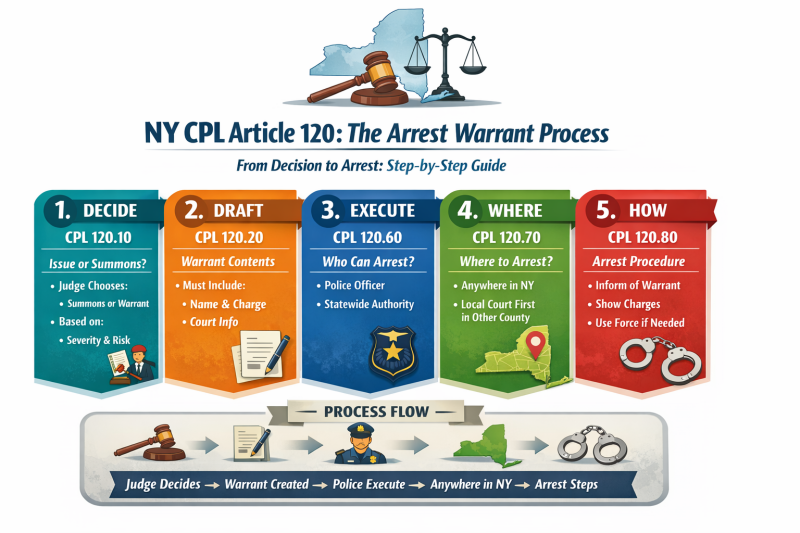
New York CPL § 120.90
What it says (in plain English):
This section explains what happens after a person is arrested on a warrant and brought before a court—especially when it’s not the court that issued the warrant.
🔑 Breakdown
🔹 (1) Appearance before a local court
- If the defendant is arrested under a warrant:
- They must be brought before a local criminal court without unnecessary delay
👉 Key idea: prompt judicial oversight
🔹 (2) If it’s NOT the issuing court
- If the defendant appears in a different court than the one that issued the warrant:
- That court can take temporary action
🔹 (3) What the local court can do
The court may:
- Release the defendant on recognizance, or
- Fix bail, or
- Commit the defendant to custody
👉 Key idea: interim control over the defendant
🔹 (4) Ensuring return to issuing court
- The process must ensure the defendant will:
- Appear in the court that issued the warrant
👉 Key idea: case ultimately goes back to origin
🧠 Example
A warrant is issued in Albany → defendant is arrested in NYC → appears before a NYC court → that court sets bail → defendant must later appear in Albany.
📝 Bottom line
CPL § 120.90 governs the post-arrest court handling:
- Immediate appearance before a judge
- Temporary decisions (release, bail, custody)
- Ensuring the defendant returns to the issuing court
New York Criminal Procedure Law § 120.90 — Delegating a Warrant (Plain English)
🔑 What “delegating a warrant” means
Under CPL § 120.90, delegating a warrant refers to what happens when:
👉 A person is arrested on a warrant in a different county than where it was issued
Instead of immediately transporting the person back, the system allows:
➡️ The local court where the person is brought to temporarily take control of the case
🔹 How delegation works step-by-step
1. Arrest happens outside issuing county
- Example: Warrant issued in Albany → arrest happens in NYC
2. Defendant is brought before a local court
- The person appears in a local criminal court in the county of arrest
3. Issuing court’s authority is “delegated”
- The issuing court effectively allows the local court to act on its behalf (temporarily)
This is the “delegation”
4. Local court can act like the issuing court (limited powers)
The local court may:
- Release on recognizance (ROR)
- Set bail
- Commit the defendant to custody
5. Case returns to issuing court
- The defendant must still:
- Appear in the original court
- The delegation is temporary only
🧠 Why this exists
Without delegation:
- Every out-of-county arrest would require immediate transport back
- That would be inefficient and delay arraignment
👉 Delegation allows:
- Faster court appearance
- Local handling of custody decisions
- Smooth transfer back to issuing court
🧾 Key concept to remember
👉 Delegation ≠ transfer of the case
- ❌ The case does NOT move permanently
- ✅ Only temporary authority is given to another court
📝 One-line memory rule
👉 “Arrest elsewhere → local court steps in temporarily → case goes back.”



New York CPL § 120.90(7)
🔑 What it covers
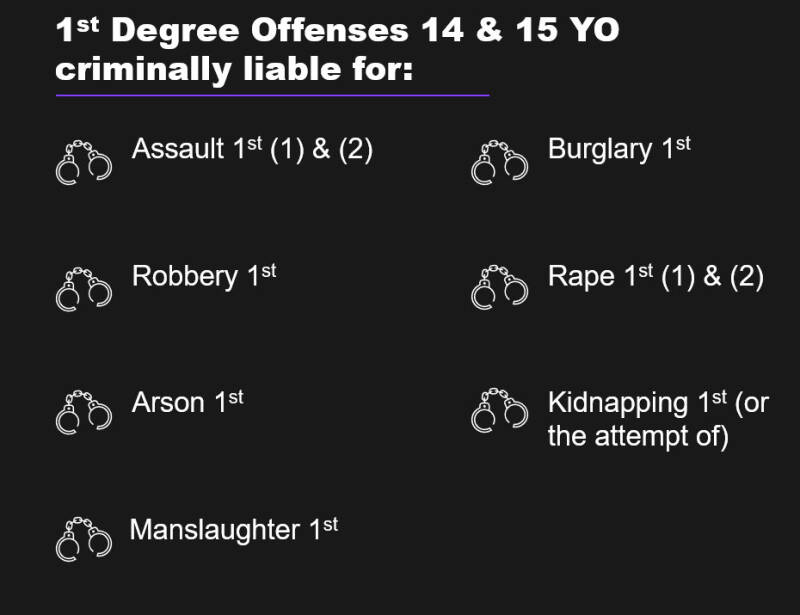
Subdivision (7) provides special rules when the defendant is a juvenile offender (JO) who is arrested on a warrant.
👉 A juvenile offender = a youth (generally 13–17) prosecuted in the adult criminal system for certain serious offenses
🔹 Core rule
- After arrest on a warrant, a juvenile offender must be brought:
- Before the appropriate court without unnecessary delay
🔹 Where they must be brought
- Typically to a:
- Youth Part of a superior court (e.g., Supreme or County Court), or
- Another court authorized to handle JO cases
👉 Not handled like a typical adult arraignment in all situations
🔹 Purpose of the rule
- Ensures:
- Specialized handling of youth cases
- Compliance with Raise the Age (RTA) framework
- Proper protections and procedures for minors
🔹 Key difference from adults
- Adults → standard local criminal court arraignment
- Juvenile offenders → must be routed into the correct youth-part system
🧠 Example
A 16-year-old is charged with a qualifying felony and arrested on a warrant → must be brought promptly before the Youth Part, not just processed like a normal adult defendant.
📝 Bottom line
Subdivision (7) ensures that when a juvenile offender is arrested on a warrant, they are:
- Promptly brought to court, and
- Directed into the proper youth-focused court structure, not just standard adult processing
New York CPL § 140.05
What it says (in plain English):
This law explains when a police officer is allowed to make an arrest for an offense without a warrant.
🔑 Key points
- A police officer may arrest someone for:
- Any offense committed in their presence (including violations, misdemeanors, or felonies), or
- Certain offenses not committed in their presence, if other legal rules allow it (covered in related sections)
👀 “In their presence” means:
- The officer personally sees or directly observes the conduct that makes up the offense.
⚖️ Why this matters
- It defines the basic authority of police to act immediately without needing a judge’s warrant.
- It’s the starting point for understanding lawful arrests in New York.
🧠 Example
- An officer sees someone vandalizing property → they can arrest on the spot without a warrant.
New York CPL § 140.10
What it says (in plain English):
This section explains when a police officer can arrest someone without a warrant, including situations beyond offenses committed in their presence.
🔑 Main rules
A police officer may arrest a person without a warrant when:
1. Offense committed in their presence
- The officer personally observes:
- A felony, misdemeanor, or violation
2. Felony (even if not in their presence)
- The officer has reasonable cause (probable cause) to believe:
- A felony was committed, and
- The person committed it
3. Certain misdemeanors not in their presence
- Allowed if the officer has reasonable cause and the situation falls under specific categories, such as:
- Domestic violence / family offenses
- Violation of an order of protection
- Other specifically authorized offenses under the law
⚖️ “Reasonable cause” (probable cause)
- Means the officer has facts and circumstances that would lead a reasonable person to believe a crime was committed.
New York CPL § 530.70 — Bench Warrant
🔑 Core rule (plain English)
A bench warrant issued by a superior court under CPL § 530.70 may be executed:
👉 Anywhere within New York State
🔹 Who can execute it
- Any police officer authorized to make arrests in New York
🔹 Geographic scope
- Not limited to:
- The issuing county, or
- The court’s local jurisdiction
👉 It has statewide reach
🔹 Practical effect
- If a defendant fails to appear and a bench warrant is issued:
- They can be arrested anywhere in NY
- Then brought back into the court system
🧠 Example
A bench warrant is issued in Albany County → defendant is found in NYC → NYPD can execute the warrant and arrest them there.
📝 Bottom line
👉 A CPL § 530.70 bench warrant is statewide in scope and can be executed by any authorized police officer anywhere in New York.
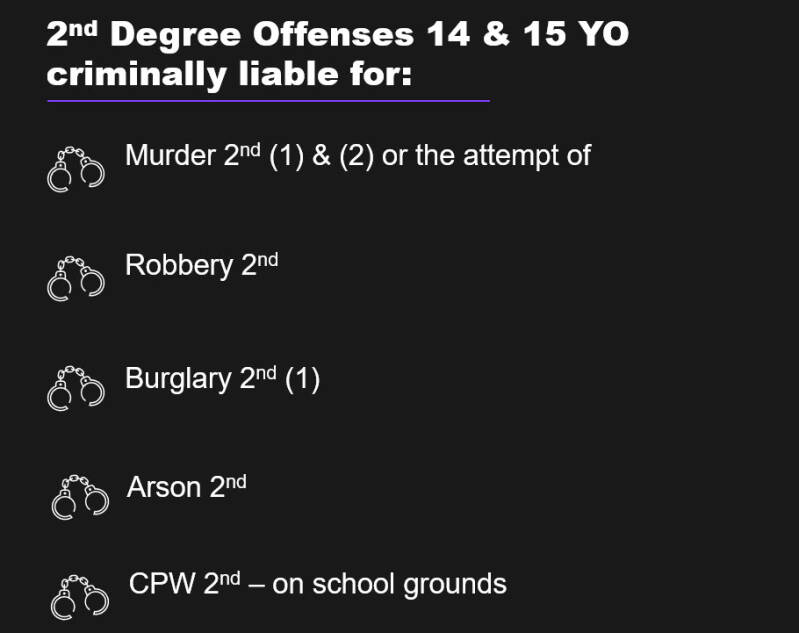
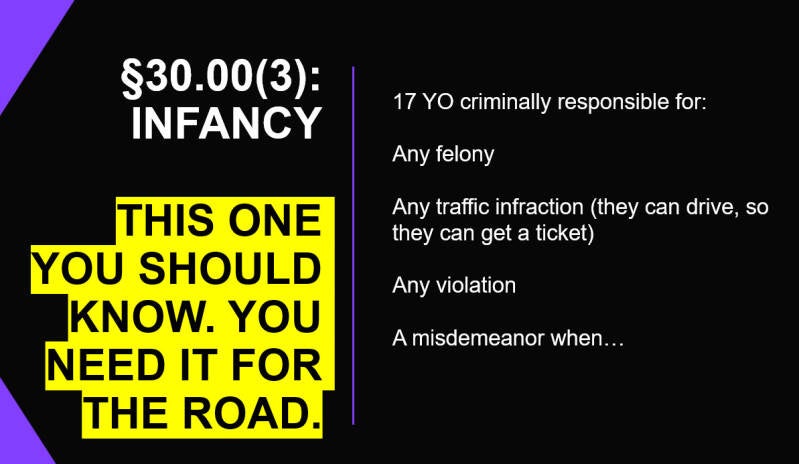
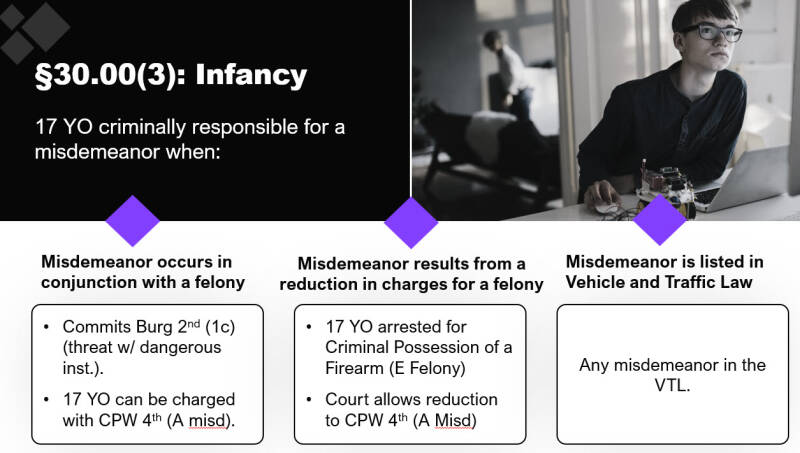
Defense of Infancy - §30.00(3)
⚖️ 🧠 NY Penal Law Justification — Side-by-Side
Section What It Covers Key Idea Memory Trigger
New York Penal Law § 35.05 General justification Lawful authority or emergency “Excused conduct”
New York Penal Law § 35.10 Specific roles using force Who can use force + when “Authorized actors”
New York Penal Law § 35.15 Self-defense When YOU can use force “Protect yourself”
🔹 35.05 — GENERAL JUSTIFICATION
👉 Broad excuse for conduct
- Covers:
- Official duties
- Court orders
- Emergency (necessity)
- Not limited to force—can justify any conduct
🧠 Think: “Was this legally necessary or authorized?”
🔹 35.10 — SPECIFIC USES OF FORCE
👉 Certain people are allowed to use force
Applies to:
- Police / peace officers
- Corrections officers
- Parents (discipline)
- Teachers / guardians
- Medical professionals
Key rule:
- Force must be reasonable and appropriate
🧠 Think: “Is this a person allowed to use force in this role?”
🔹 35.15 — SELF-DEFENSE / DEFENSE OF OTHERS
👉 Everyone’s right to protect themselves
Non-deadly force
- Allowed when:
- Necessary to stop unlawful force
Deadly force (higher standard)
Allowed if:
- You reasonably believe the other person is:
- Using or about to use deadly force, OR
- Committing:
- Kidnapping
- Robbery
- Rape
- Burglary
🚨 Duty to retreat (NY rule)
- Must retreat if safely possible
- ❌ Exception: No duty to retreat in your home
🧠 Think: “Was force needed to protect against imminent harm?”
🔥 KEY DISTINCTIONS (HIGHLY TESTED)
1. Scope
- 35.05 → ANY conduct
- 35.10 & 35.15 → ONLY physical force
2. Who it applies to
- 35.05 → Anyone (broad situations)
- 35.10 → Specific roles
- 35.15 → Everyone (self-defense)
3. Focus of analysis
- 35.05 → Was it necessary/authorized?
- 35.10 → Was the actor allowed + reasonable?
- 35.15 → Was the threat real + force justified?
🧠 ONE-LINE MASTER RULE
👉 35.05 = Excuse
👉 35.10 = Authority
👉 35.15 = Self-defense
📝 Bottom line
- 35.05 = broad justification (law + necessity)
- 35.10 = structured, role-based force
- 35.15 = personal protection rules (with duty to retreat)
⚖️ 🧠 NY Justification — 35.27 vs 35.30
Section What It Covers Key Rule Memory Trigger
New York Penal Law § 35.27 Resisting arrest No force allowed (even if arrest is unlawful) “Don’t fight arrest”
New York Penal Law § 35.30 Police use of force When officers can use force (incl. deadly) “Police powers”
🔹 35.27 — RESISTING ARREST
👉 Limits self-defense
🔑 Core rule
- A person may NOT use physical force to resist:
- An arrest (or attempted arrest)
- By a police or peace officer
👉 Even if the arrest is unlawful
⚠️ Why this exists
- Prevents violence during arrests
- Legal remedy = court, not resistance
🧠 Example
- Police arrest you without probable cause →
❌ You cannot fight back physically
✅ You challenge it later in court
📝 Memory
👉 “Bad arrest ≠ permission to resist”
🔹 35.30 — USE OF FORCE BY POLICE
👉 Grants authority to law enforcement
🔑 Non-deadly force
Police may use reasonable physical force to:
- Make an arrest
- Prevent escape
- Defend themselves or others
🔥 Deadly force (higher standard)
Allowed when officer reasonably believes:
- The suspect:
- Committed or attempted a serious felony, AND
- Is using or about to use deadly force, OR
- To defend against deadly force
🚨 Key limits
- Must be:
- Reasonable, and
- Necessary under the circumstances
🧠 Example
- Suspect pulls a gun during arrest →
✅ Officer may use deadly force
🔥 KEY CONTRAST
Who the rule protects
- 35.27 → Limits the defendant
- 35.30 → Protects/authorizes police
Direction of force
- 35.27 → Citizen → police ❌
- 35.30 → Police → citizen ✅ (with limits)
Core conflict idea
👉 These sections work together:
- You can’t resist arrest (35.27)
- But police must still use lawful force (35.30)
🧠 ONE-LINE MEMORY
👉 35.27 = No resisting arrest
👉 35.30 = Police can use force to arrest
📝 Bottom line
- 35.27 removes self-defense as a justification against arrest
- 35.30 defines when police can lawfully use force (including deadly force)